Thomas Cruise Mapother IV has spent four decades running, jumping and asking us not to mention the phone book on the driver's seat.
- Subject
- Tom Cruise
- Filed by
- Trumpery Times Desk, Aug 18, 2025
- Reading time
- 19 min
- Believability
- Stunt-doubled

Hollywood Maverick 101: How to Stay Relevant for 40 Years
Hi, it’s Thomas Cruise Mapother IV – because apparently, “Tom Cruise” just wasn’t flashy enough even for Hollywood’s pint-sized action hero. This 62-year-old American star has spent decades perfecting the art of asking us to pretend not to notice that their guy needs a phone book to see over the wheel while driving. And we’re all probably guilty of maintaining this pleasant but apparently necessary delusion.
His awards room must be a shrine to almost-winning: an Honorary Palme d’Or, sitting proudly at eye level, three Golden Globes, and four Academy Award nominations forever just out of reach – just like anything on the store’s top shelf. His movies, unbelievably, have generated more than $13.3 billion worldwide, and we all know it’s far less impressive to be enormous than it is to sprint very, very fast while scowling because, oh dear, something happens to be exploding behind us.
Tiny Tom’s acting career began in the early 1980s, during what must have been Hollywood’s finest era of strategic overcompensation. “Risky Business” in 1983 gave birth to what felt like a thousand imitators, all apparently convinced that dancing around in your underwear was the secret to becoming Tom Cruise, but 1986’s Top Gun was the film that would finally place our vertically-challenged hero firmly in sex-symbol territory. Nothing screams “irresistible pilot” quite like a man who is unlikely to have been designed with cockpit ergonomics in mind, but wins everyone over through dazzling teeth and a frankly unreasonable amount of charm.
The late 1980s also included Tom’s “serious actor” period – the stage every action hero must pass through to prove they can stitch something meaningful together between all the pyrotechnics. Rain Man and Born on the Fourth of July demonstrated that he was capable of serious work, with the latter winning him a Golden Globe for being so convincing as Ron Kovic that people genuinely forgot he was acting – a skill that would serve him well later when explaining Scientology to anyone who could be bothered to listen.
Then the ‘90s arrived, and Tom entered his do-everything heartthrob era. A Few Good Men had him being intellectually outmanoeuvred by Jack Nicholson, who seemed to steal every scene simply by metaphorically and literally glaring over him. Interview with the Vampire was a particularly decadent epic – watching the pint-sized hero become an undead creature of darkness all while looking like an unruly butterfly could knock him down was quite the spectacle. Jerry Maguire gave us “Show me the money!”, Tom Cruise’s unofficial motto considering his stratospheric pay demands for essentially running around in exotic locations.
The crowning achievement, though, still belongs to the Mission: Impossible franchise – eight movies of Tom Cruise suspending himself ever higher, while snubbing the laws of physics, common sense, and workplace safety regulations all at the same time. The self-proclaimed man who needs a stepladder to reach his favorite cereal had convinced global audiences that he could climb Dubai’s Burj Khalifa and ride planes like skateboards. It’s either the greatest acting achievement in cinematic history or the longest-running Napoleon complex on record.
The stunts became increasingly death-defying because Tom himself apparently isn’t fond of green screens or computer wizardry. “Computer-generated images? Screw that. I’ll just hang off this helicopter with my bare hands, thank you very much!” His Guinness World Record title for the most consecutive $100-million openings is essentially a record for “movies where Tom Cruise runs around like a headless chicken while only looking mildly concerned” – those little legs pumping like little hummingbird wings as he races through flames and away from questions about Zenu.
And Scientology – Tom’s support of L. Ron Hubbard’s science-fiction-inspired beliefs has become an indispensable part of his public image. His Oprah couch-jumping, “I know the history of psychiatry!” outburst became internet gold. Watching him deliver lectures about alien overlords with the same seriousness he brings to defusing imaginary bombs was peak unintentional comedy.
The man has a pilot’s licence, which somehow makes perfect sense and absolutely no sense at all. Tom, naturally, had to learn how to fly – possibly just to experiment with mid-air stunts on his days off. The image of him needing booster seats to reach the flight stick, however, remains irresistibly funny to those of us with a cruel sense of humor.
At 62, Tom Cruise is Tinseltown’s biggest bankable enigma, living proof that raw determination, excellent dental hygiene, and humanity’s willingness to suspend disbelief can overcome any vertical disadvantage God could bestow. He’s been People’s Sexiest Man, received military commendations while playing soldiers, and continues to risk life and limb for our sick entertainment.
In an era of CGI doubles and green-screen everything, Tom Cruise remains stubbornly, defiantly analog – a one-man, pocket-size action figure who refuses to accept that gravity exists solely to bring him down.

From 15 Schools to Superstar: A Chaotic Childhood Story
Prior to the death-defying, ageless star power of Tom Cruise in Hollywood, there was only Thomas Cruise Mapother IV – a name so forgettable that even fate needed a face-lift. A spindly, wide-eyed American immigrant, a makeover awaited him in the most unlikely of places: a fourth-grade classroom in Ottawa, where dreams are born from circumstance.
Flashback to 1971: the Mapother family rolls into Canada like a downmarket version of the North American Dream. Dad – Thomas “The Destroyer of Family Dinner” Mapother III – had won a contract performing defense work as a subcontractor with the Canadian Armed Forces. Which is an irony, mind you, because his own son would one day call him a “bully” and “a coward.” Nothing says military genius like hiring a contractor whose mediation talents apparently reached their peak terrifying nine-year-olds.
They wound up on Beacon Hill like some madcap sitcom no one asked for. Little Tommy, too small even to peek over his desk, wound up at Robert Hopkins Public School, where fate awaited in the guise of drama teacher George Steinburg. Under Steinburg’s guidance, wee Tommy gathered with six other lads and stumbled into one of elementary school’s greatest-ever stage prophecies: a random play by the name of “IT.”
The play took place at the Carleton Elementary School drama festival, where festival coordinator Val Wright was bracing herself for the typical fourth-grade disaster of forgotten lines and homespun costumes. What she witnessed instead was what she later referred to as “excellent movement and improvisation. A classic ensemble piece.” Translation: nine-year-old Tom Cruise was doing his own stunts and method acting during recess.
But Canada gave Tom something more than a dramatic wake-up call: it gave him a survival manual for a nomadic life. The Mapother family motto: “Why put down roots when you can just buy moving boxes?” By sixth grade, he’d switched to Henry Munro Middle School, one of the stop-offs in a childhood odyssey that would see him attend fifteen schools in fourteen years. You learnt your times tables; Tom learned life is a Grand Guignol of make-it-up-as-you-go-along theatre where your next line – and your next address – are ever-changing mysteries.
This constantly shifting world created a perfect storm for potential fame. Every move required huge amounts of adaptability. Every new school meant starting from scratch. Every dinner with dear old dad contained enough emotional material for a thousand on-screen meltdown endings. Tom, meanwhile, was getting a crash course in the strength of the human spirit while other kids were busy mastering long division.
The Canadian half of Tom’s existence ended when his mother, Mary Lee, had finally had enough of the “merchant of chaos.” In a scene swiped straight from every Lifetime original movie ever produced, she rounded up Tom and his three sisters – Lee Anne, Marian, and Cass – and staged a dramatic escape onto American soil. One can only imagine the dialogue: “Kids, we’re off to America, the land of dreams and, ideally, fathers who don’t treat their families like hostile territory.”
With the benefit of hindsight, those Ottawa years were ideal preparation. Being forced to move constantly helped him stay nimble. Having a dysfunctional family provided enough emotional material for countless acting roles. And that grade-school acting experience? It planted the seed that would grow into one of Tinseltown’s most recognisable talents – one seemingly locked in a time warp since the Reagan era.
It’s almost poetic. Tom Cruise discovered his calling in the land of universal healthcare and politeness, thanks to a drama teacher who probably thought he was merely running an after-school program. His dad had no idea he was in the presence of a legend in waiting – a man who would one day convince audiences that the answer to life was running very, very fast and voluntarily jumping out of airplanes.
The irony is delicious. Canada – that humble, laid-back country – unwittingly provided Hollywood with its ultimate action hero. It gave Tom a thunder jolt of a wake-up call, survival instincts, and seemingly magical anti-aging skill. For all that accidental brilliance, we are forever indebted. Who would have thought that between hockey arenas and Tim Hortons, a future legend was learning to fly?
Tom Cruise’s Acting Career

1980s: From Busboy to Box Office: Tom Cruise’s Wild Rise to Fame
Tom Cruise – the actor who assured studios that height is merely an attitude issue and that a very, very quick sprint is a must-have acting technique. His early CV is a masterclass in using his brashness effectively, a reminder that the biggest improbabilities require only limitless self-belief and zero respect for Newtonian logic.
Now we see an 18-year-old Cruise bursting onto the New York City acting scene with the jerky swagger of an over-hyped squirrel. Armed with his mother’s blessing and what can only be called industrial-strength optimism, he set about making his mark on the city of entertainment with all the acting chops of a second-string high school drama club member. His first acting gig? Busboy – because nothing screams “future action star” like learning the finer points of wiping down tables. The poetry is almost claustrophobic: a man who would go on to clean up Hollywood’s spills started out with a dishcloth in hand.
But our vertically-impaired hero wasn’t satisfied with New York’s limited potential. He stuffed his ambitions into whatever duffel bag was available and bought a one-way ticket to Los Angeles, the sun-baked desertscape where failed ambitions become Botox appointments. Having signed with CAA – presumably so someone could officially recognize his height disadvantage – he launched himself into a business full of headliners who didn’t need milk crates during on-screen kisses.
His first on-screen appearance in 1981’s Endless Love flashed by with the dramatic significance of a waiter clearing the table but a few months later “Taps” provided his career-defining moment, one that would become the blueprint for his entire career. Initially cast as a background face, Cruise impressed director Harold Becker enough to move from silent extra to speaking role. One can imagine the conversation: “The kid has such intense focus that we should probably give him a line or two before he melts the camera lens.”
Then 1983 arrived like Christmas morning for would-be heartthrobs everywhere. Francis Ford Coppola’s “The Outsiders” placed Cruise among a testosterone-fuelled ensemble cast that made adolescent girls redecorate their bedroom walls entirely. Matt Dillon, Emilio Estevez, Rob Lowe, Patrick Swayze – a lineup of peak ‘80s male attractiveness – and yet our little hero held his own among these giants of teenage angst without the aid of a stepladder.
But 1983 still had more career-defining moments in store. “All the Right Moves” was almost prophetic in its title, and “Risky Business” became the cultural phenomenon that taught America a universal rule: you can be concise, slightly manic, and irresistibly charming as long as you’re sliding across hardwood floors in your underwear while Bob Seger plays in the background. Who knew interpretive dance in tighty-whities could become a successful way to audition?
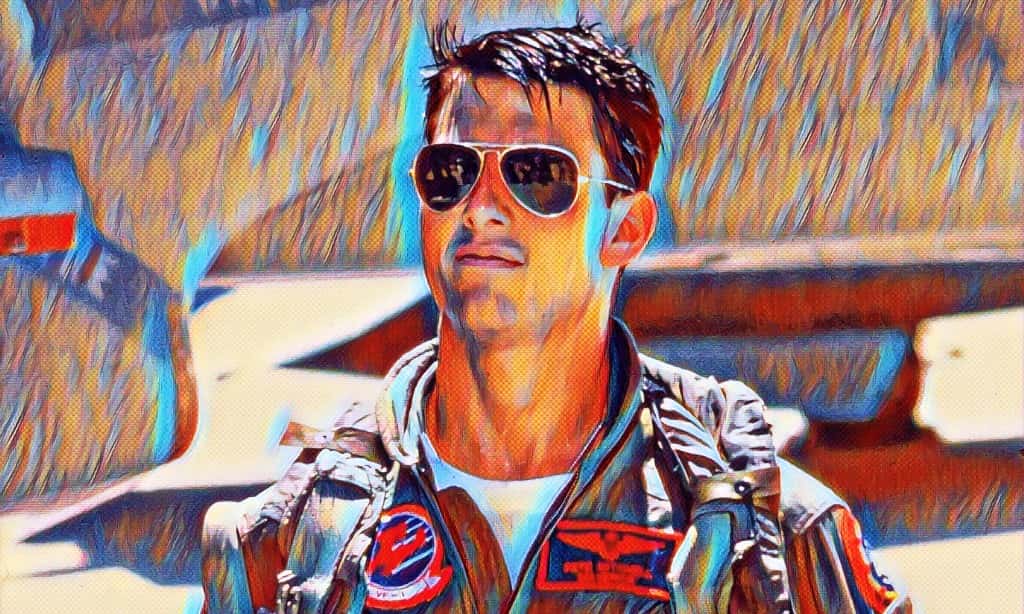
Then 1986 delivered “Top Gun,” where Cruise played a fighter pilot despite being almost too short to see what he was aiming at. This was the man refusing to let physics become anything more than a mere suggestion. Having flown so high, he co-starred in Martin Scorsese’s “The Color of Money” alongside Paul Newman, one of those figures who had been cool with a capital “C” long before Cruise became the focus of America’s fascination with Scientology. The Washington Post described both actors as looking like “genuinely top-notch pool hustlers,” seemingly unaware they were witnessing the rise of a man who would eventually make a career out of dodging explosions.
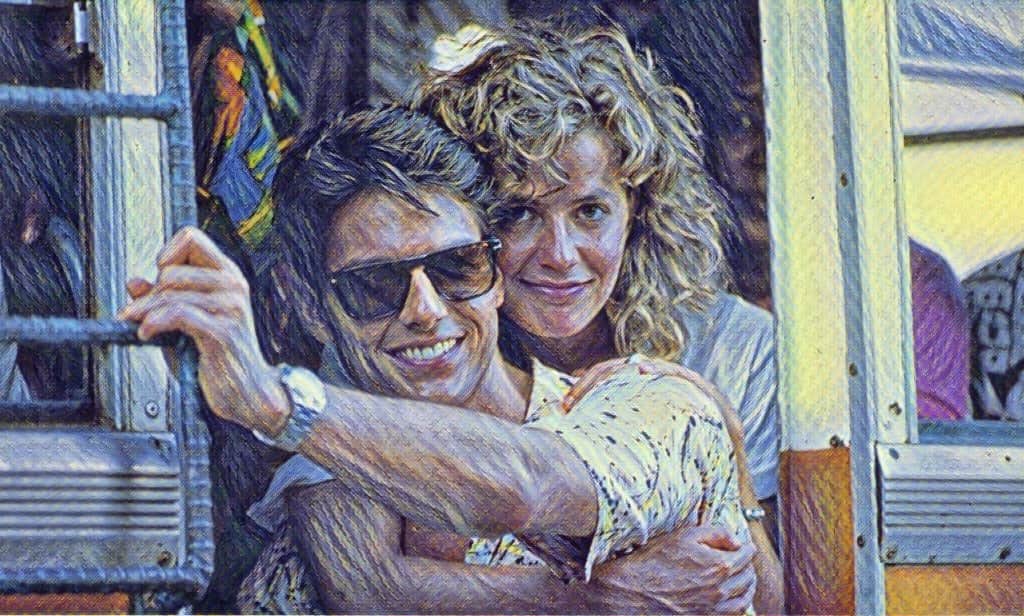
“Cocktail” in 1988 demonstrated that box-office success and critical acclaim are entirely separate beasts. The film earned enough money to convince anyone that it wasn’t hilariously bad, and Cruise’s performance earned him a Razzie nomination for Worst Actor – an honour reserved for genuine commitment to questionable choices. Fortunately, “Rain Man” later that year reminded everyone there was a serious actor beneath all that manic energy and gravity-defying eccentricity.
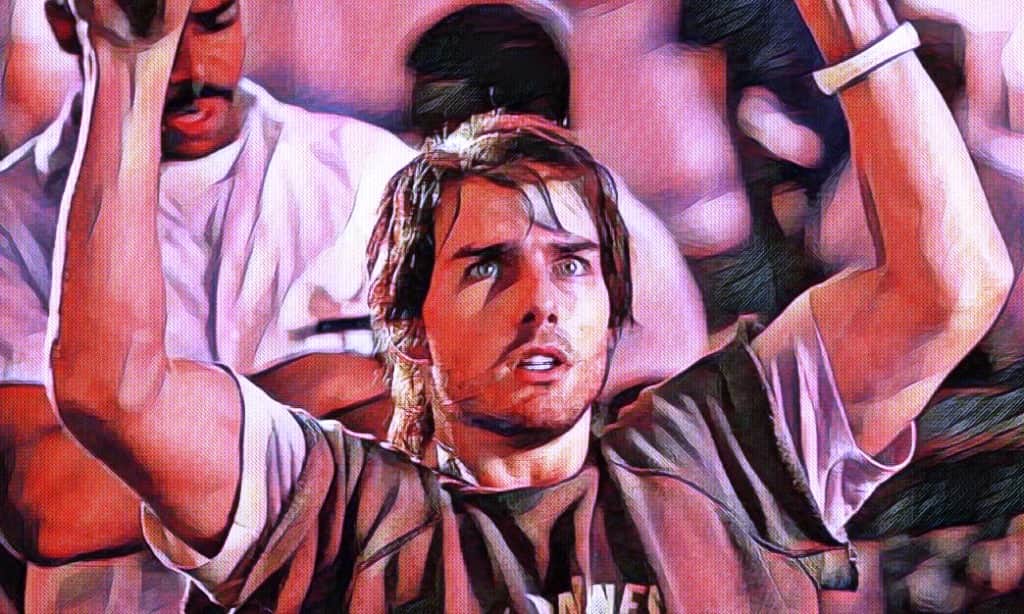
But “Born on the Fourth of July” in 1989 was Cruise’s ultimate “hold my protein shake and watch this” moment. Roger Ebert, who rarely handed out undeserved praise, produced what amounted to a love letter: “Nothing Cruise has done will prepare you for what he does in Born on the Fourth of July. His performance is so good that the movie lives through it.” Overnight, the New York busboy had become a Golden Globe-winning, Academy Award-nominated sensation.
From background extra to Best Actor nominee, Cruise’s early career defied every rational expectation of Hollywood stardom. It proved that perhaps the greatest improbabilities of success can be achieved through sheer refusal to accept one’s boundaries – a philosophy that would later come in handy when he decided death-defying stunts were the way to make it in Hollywood now.
1990s: Drama roles
The 1990s were when Tom Cruise set out on a crusade to demonstrate that he was more than a pretty face who could run in slow-mo. But here’s the twist: he proved the point so conclusively that the rest of Tinseltown took early retirement.
Let’s talk about the elephant in the room – having your wife appear in not one, but two of your films. Nicole Kidman played Cruise’s love interest in both “Days of Thunder” (1990) and “Far and Away” (1992), because apparently the pool of actors in Hollywood was so limited they had to search down the back of the couch just in case. And, of course, business mixed with pleasure somehow brought box-office returns instead of divorce proceedings. Who would’ve guessed nepotism could be so profitable?
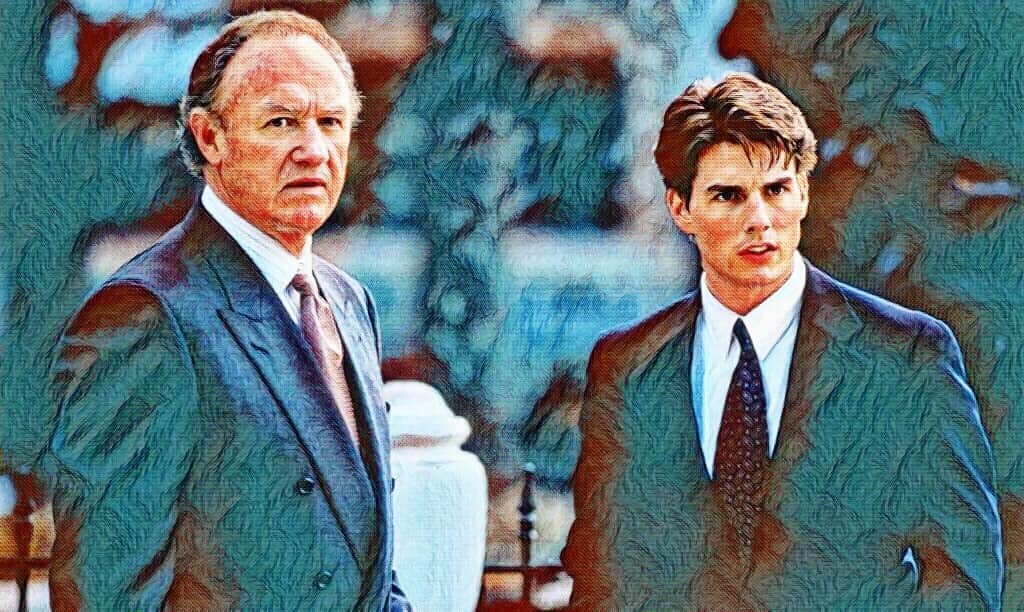
Then there was “The Firm,” where Cruise starred as a lawyer – because nothing tests “dramatic range” quite like seeing America’s ultimate action star scowling at legal briefs. Critics devoured the movie like complimentary donuts at the precinct, and box-office receipts could have financed a few small countries. Apparently, putting Tom Cruise in a suit was the cinematic equivalent of discovering fire, only with higher profit margins.
This is where things become delightfully insane. In 1994, our golden boy took a bite out of “Interview with the Vampire” alongside Brad Pitt, Antonio Banderas, and Christian Slater. When author Anne Rice heard about the casting decision, a vegetarian visiting an all-you-can-eat abattoir would have been equally horrified. She had envisioned a brooding figure named Julian Sands – you know, someone built for Gothic castles and European menace. Instead, she got Tom Cruise, who seemed to possess all the menace of a golden retriever.
The twist? Rice watched the film and loved it. She even paid $7,740 (around $16,420 today) for a two-page advertisement in Daily Variety essentially saying, “Oops, my mistake, Tom. You are brilliant.” The woman spent premium advertising money publicly eating crow. That’s not just vindication- that’s commitment.
The mid-90s brought “Mission: Impossible,” in which Cruise starred as superspy Ethan Hunt – an actor so perfectly suited to the role through his “breathlessly gung-ho screen personality” that it felt inevitable. Of course, no one expected him to actually dangle from helicopters and perform death-defying stunts. Brian De Palma directed the testosterone-fuelled classic, and the franchise has since produced enough sequels to fill an entire shelf at Blockbuster. Clearly, watching Tom Cruise risk life and limb never gets old.
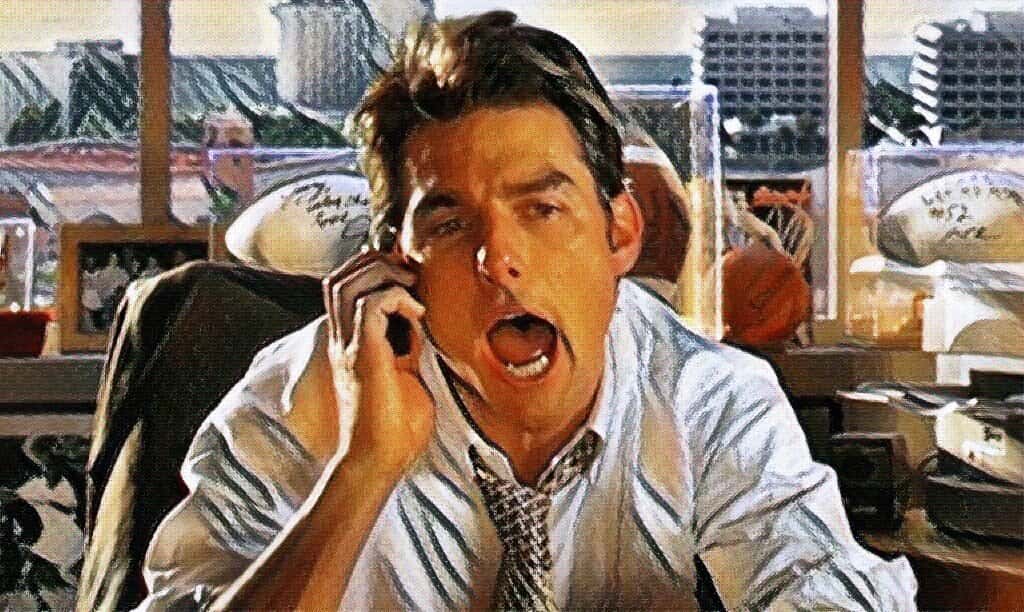
That same year, Cruise tugged heartstrings in “Jerry Maguire,” playing a sports agent tormented by his conscience – an oxymoron that somehow worked beautifully. Cameron Crowe wrote the masterpiece, and Cruise delivered the kind of performance that made tough guys shout “Show me the money!” into their pillows. It earned $273 million worldwide all from a $50 million budget, an economic miracle on par with turning water into wine.
The decade’s grand finale arrived as a double-bill of dramatic brilliance that would have made Shakespeare green with envy. First came “Eyes Wide Shut,” featuring Cruise and Nicole Kidman under the direction of Stanley Kubrick in what may be the most expensive couples therapy session ever filmed. Peter Bradshaw praised Cruise’s reckless honesty, noting how he “opens himself up in that ferociously committed way.” Translation: the man acted his socks off—sometimes literally.
Then came “Magnolia,” with Cruise delivering a supporting performance as motivational speaker Frank T.J. Mackey. It was so wildly intense that watching him felt like witnessing a beautiful car crash with excellent dialogue. Peter Travers called Cruise “a revelation” who “seethes with the chaotic energy of a wounded animal.” A second Golden Globe and an Oscar nomination followed, because clearly the Academy wanted to be emotionally destroyed by Tom Cruise too.
This remarkable decade saw Cruise do far more than simply act—he evolved from action star into a serious dramatic performer with the confidence of a magician pulling rabbits from hats, except the rabbits were Oscars and the hat was lined with box-office receipts. Versatility became his greatest weapon, with critical praise remaining as steady as gravity and his popularity proving almost as reliable as death, taxes, and his urge to perform increasingly dangerous stunts.
2000s: The Decade Tom Cruise Convinced Hollywood He Could Actually Act
The 2000s saw Tom Cruise rise so high into the stratosphere of ridiculousness that gravity itself was forced to pen an outraged letter requesting an attorney. By the time “Mission: Impossible 2” arrived in 2000, our little risk-taker didn’t just return – he burst back into our lives like a motorbike smashing through the plate-glass window of sanity.
Hong Kong slow-motion violence poet laureate John Woo took the helm and transformed Ethan Hunt into a motorcycle-riding suicidal ballet dancer, because apparently regular espionage wasn’t dangerous enough. The reward? A worldwide box-office gross of $547 million, proving audiences would gladly pay good money to watch a man treat the laws of physics as optional suggestions. Critics were rather less enthusiastic. Some adored Woo’s operatic violence; others felt they’d wandered into a very expensive cologne advert directed by a man who’d somehow been given unlimited access to explosives.
But where sanity took a flying leap off the cliff was with its movie-fever fantasy: the biggest-grossing film of 2000. Yes, at a time when cinema audiences could have watched literally anything, they collectively decided, “You know what’s plausible? Spending two hours watching Tom Cruise dangle from increasingly precarious heights, with his hair providing structural support comparable to a suspension bridge.” The MTV Movie Awards, arbiters of high culture and cinematic excellence, awarded him Best Male Performance – presumably because nobody else that year had made insurance adjusters cry quite so convincingly.
Between M and its eventual sequel, our tireless hero raced through Hollywood like a hyper-caffeinated hummingbird on Red Bull. Vanilla Sky showed that he could sit photogenically in misery while sporting a face full of facial hair. Minority Report proved that flying through futuristic worlds remained one of his favourite hobbies. The Last Samurai revealed the curious fact that the last samurai was apparently a man from Syracuse with excellent dental work. Yet somehow, we remained most enthralled by the Mission: Impossible mayhem: the increasingly ludicrous spectacle of a man waging a personal war against gravity itself.
Then came 2006 and Mission: Impossible III, the movie that posed perhaps the biggest question in cinema: “What if we inflict emotional and physical agony on Ethan Hunt, preferably while dangling him from something no sane insurance company would cover?”
Curmudgeonly critics, those grumbling guardians of artistic integrity, fell for this one like hypothermic penguins discovering a hot tub. They called it a “return to form” – which, in Mission: Impossible terms, means something slightly less insane than a fever dream, while still being quite capable of making insurance companies spontaneously combust during the stunt sequences.
The movie earned close to $400 million at the box office, once again proving audiences have an apparently endless appetite for watching Tom Cruise disregard the laws of physics like unwanted party guests who simply refuse to leave. Philip Seymour Hoffman arrived as the villain, delivering such masterfully controlled menace that previous Mission: Impossible antagonists suddenly seemed to have graduated from the Wimp Academy of Wannabe Bad Guys.
What’s particularly fascinating about the evolution of this trilogy is how closely it mirrors Cruise’s own career arc: from “Behold, I can do stunts!” to “Behold, I can do bigger stunts!” to “Behold, I can do impossibly large stunts while expressing something close to real human emotion!” It’s like watching someone realize that audiences appreciate character progression as well as explosions and motorcycle chases that stretch the realms of possibility.
The reviews became a slow-burning romance novel: initial scepticism, growing affection, and eventually begrudging respect that bordered on Stockholm syndrome. Writers discovered that complaining about realism in a Mission: Impossible film is like complaining that unicorns don’t properly file their tax returns – you’re missing the whole point of the exercise.
Orbiting around all of this madness is our hero Cruise, surrounded by awards and dangling from heights that became progressively more ludicrous, as though the laws of physics had personally offended him shouting: “Physics? Wherever we’re going, we don’t need physics!” The man has resurrected his career from supposed disaster countless times. He is the Lazarus of impossible stunts – only with better hair and, naturally, a better smile.
2010s: All Action (Movies)
The 2010s were Tom Cruise’s peak of sheer wild-eyed craziness – the decade when Tinseltown’s ultimate mad genius explained physics to its own arch-nemesis and made box-office projections look like a joke. Buckle up, folks, because the trainwreck is in full gear right now.
“Knight and Day” arrived in 2010, but even Cruise’s otherworldly charm couldn’t rescue Cameron Diaz’s career from its comfortable obscurity. This particular action-comedy flop was treated by critics like a tonne of toxic waste, and ticket-buying audiences happily gave their hard-earned cash to almost anything else. “Knight and Day” was born with its own cinematic death certificate already signed off.
“Mission: Impossible – Ghost Protocol” arrived with Cruise taking his ongoing feud with gravity to the Burj Khalifa, scaling the world’s tallest building and hanging off its glass walls with the casual disregard of a man who had forgotten insurance was a thing.” Critics wrote love letters, audiences turned out in droves, and after $694 million at the box office, everyone remembered why they adored the impossible man. Suddenly, watching Cruise almost die on-screen felt like a personal religious experience.
As a bonus twist, “Rock of Ages” in 2012 transformed Cruise into Stacee Jaxx, a rock star with a greater eyeliner dependency than even the most committed goth could imagine. The film tanked harder than a heavy-metal drummer coming off a three-day bender, but even its critics couldn’t deny Cruise’s commitment to going completely insane. Sometimes disaster has its own special flavor, I guess.
Winter arrived in December with the biggest casting controversy of the century. And people went absolutely berserk —how could a 5’7″ Cruise play a 6’5″ character? In high heels? But the film went on to make $217 million worldwide, proving that height differences are easily ignored when someone manages to convince an audience with just enough charisma.
“Oblivion” (2013) had all the ingredients of cinematic brilliance layered over a screenplay written by committee. Morgan Freeman appeared because science-fiction films apparently require his reliably authoritative voice, while Olga Kurylenko delivered her usual stunning-but-aloof routine. Critics admired the cast’s attractive faces while carefully side-stepping around plot holes big enough to sail a battleship through.
Then came “Edge of Tomorrow,” a “Groundhog Day” fuelled by steroids and rage. The idea was simple: kill Tom Cruise repeatedly and somehow make it better each time – a concept so brilliant it belongs on every film student’s syllabus. Critics loved it, audiences embraced it, and after $370 million at the box office, everyone agreed that murdering Cruise again and again and again makes for excellent cinema.
“Mission: Impossible – Rogue Nation” arrived in 2015 as a familiar habit. Jeremy Renner and Simon Pegg continued their supporting roles in the ongoing Cruise-watch experiment, because our hero had once again violated the laws of physics and sanity. Critics had accepted the formula by then—complaining about “Mission: Impossible” would be like criticising chocolate for containing too much chocolate.
“The Mummy” (2017) appeared as the launch of Universal’s Dark Universe franchise, only to collapse almost immediately. As Cruise raced between ancient curses and blockbuster chaos, critics tore it apart. Yet even this failure carried a reported budget of around $125 million, proving that disappointing Tom Cruise films still operate on a scale most actors can only dream of. The Dark Universe died young, leaving behind little more than expensive wreckage.
“Mission: Impossible – Fallout” (2018) arrived like the perfect finale—or, more accurately, with Cruise hanging from helicopters because apparently quitting is not an option. Critics were amazed, audiences responded enthusiastically, and after earning $791 million worldwide, Cruise achieved the highest-grossing film of his career. Perfection does, apparently, hang from airplanes.
The decade’s relationship with Cruise was a caffeine-fuelled roller coaster—chaotic, relentless, and thrilling. “Mission: Impossible” became critic-proof, while his stranger choices produced reactions ranging from “charmingly insane” to “what on earth is this?”
This is the sweet madness of Tom Cruise: even his failures often earn more than other people’s successes. This man could probably record himself reading a grocery list while performing a death-defying stunt and still turn it into a $200 million event. Tom Cruise is not merely the king of Hollywood’s madhouse—he is the entire royal family, sitting on a throne built from box-office gold and critical confusion.